
THE PRIVATE SHIFT
How Next-Gen Wealth and Family Offices Are Restructuring the Art Market in 2026
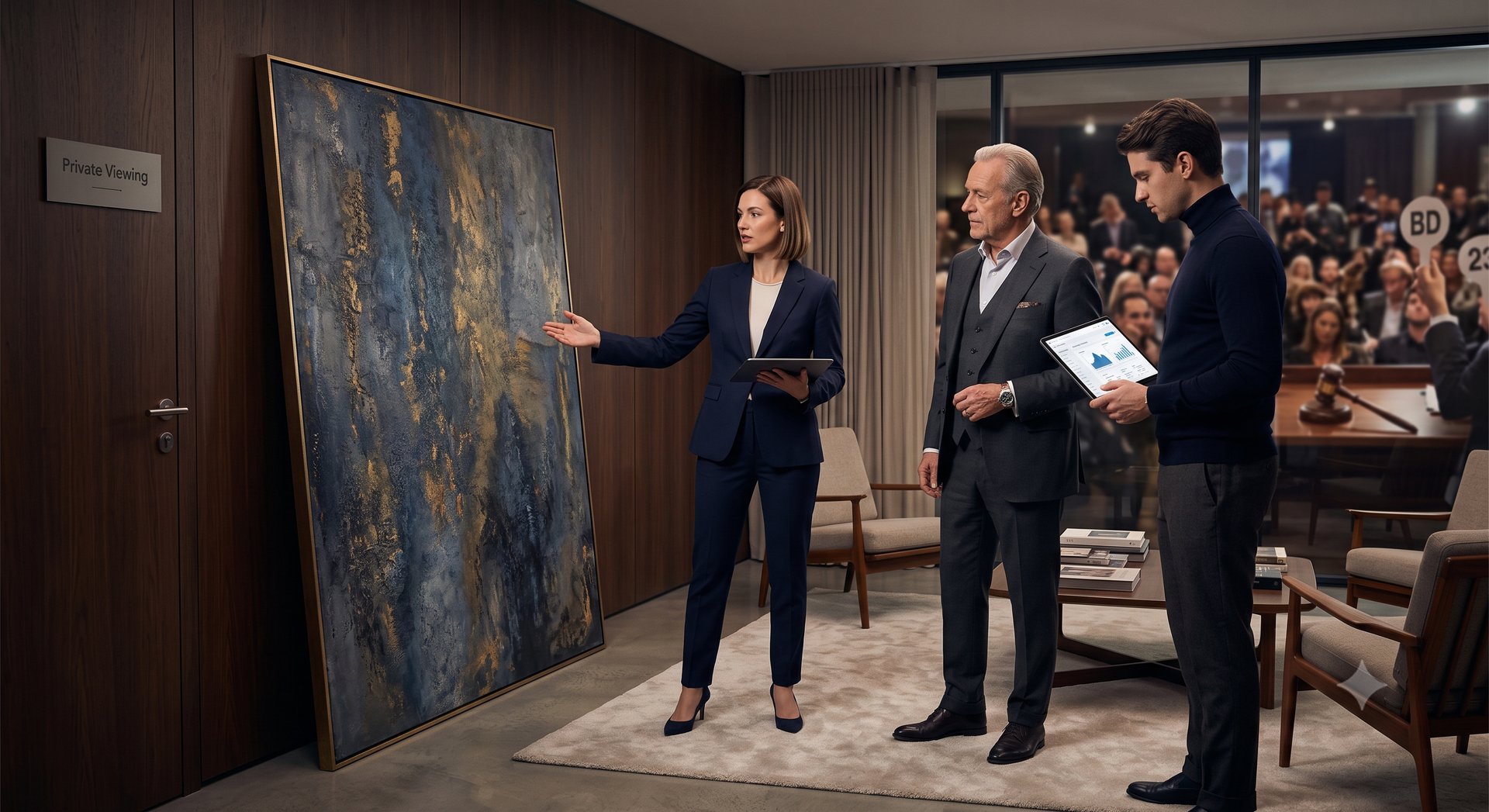
An Exclusive Market Intelligence Brief by Artbridge Nexus
Despite the global art market's modest return to growth in 2025—reaching an estimated $59.6 billion—the headlines mask a fundamental restructuring of how Ultra High-Net-Worth Individuals (UHNWIs) acquire, manage, and liquidate fine art. For art professionals reliant on the traditional gallery-to-auction funnel, the data from the past year signals a stark reality: the highest tiers of the market are moving increasingly out of public view.
This shift is being driven by two distinct but converging forces: the aggressive financialization of art collections by global family offices and an active boycott of the traditional auction circuit by the incoming generation of wealth.
Here is what serious art professionals need to know about navigating the new, highly gated liquidity ecosystem.
The Retreat from Public Exposure
The traditional model of the "public trophy hunt" is dying. While public auction sales increased by 9% year-on-year in 2025, that growth was heavily artificial, propped up by a decade-high reliance on financial guarantees.
According to a Spring 2026 Bank of America analysis, in 2016, guarantees backed just 36% of the value of New York Evening Sales; by 2025, that figure surged to 78%. Sellers of masterpiece-level works are demanding absolute certainty and mitigating risk at all costs. When guarantees cannot be met, consignors are fleeing the auction block entirely. According to the 2025 Art Basel and UBS Global Art Market Report, private sales reported by auction houses actually increased by 14% by value, directly contrasting with a 25% drop in public auctions for high-end works, demonstrating a massive preference to "discreetly sell higher-value works rather than risk burning them on the open market".
The Rise of "Art Finance" in the Family Office
This demand for discretion has catalyzed the rapid growth of "Art Finance" divisions within wealth management firms and family offices. UHNWIs are no longer viewing their collections as static cultural trophies; they are heavily leveraging them for liquidity.
According to Fotini Xydas, Head of Art Finance at Citi Wealth, clients with a net worth exceeding $100 million are increasingly utilizing art-backed loans. "We lend on average 50% of the value of their collections," Xydas notes, allowing UHNWIs to unlock capital without triggering the tax consequences of a sale or surrendering the physical work.
For private dealers and art advisors, this means your competition is no longer just other gallerists. You are now navigating the strict due diligence firewalls, compliance checks, and collateral requirements of institutions like Citi and Deloitte. Advisors must now pitch acquisitions not just on cultural merit, but on their viability as secured financial collateral.
The Next-Gen Boycott of the Auction Block
Simultaneously, the "Great Wealth Transfer" is actively disrupting the established sales channels. The incoming cohort of Millennials and Gen Z collectors—who accounted for 25% to 33% of bidders at major auction houses in 2024—have drastically different acquisition habits than their predecessors.
Most notably, they are actively rejecting the traditional auction house model. A 2024 survey by the secondary market platform MyArtBroker revealed a staggering statistic: 78% of Gen Z collectors stated they would never buy art from an auction house.
As noted by Georgina Adam, author of NextGen Collectors and the Art Market, "there is less trust in institutions," and these younger buyers often "value experiences over possessions," seeking transparency and direct artist support that traditional auctions struggle to provide. This digitally native generation is abandoning the opaque, high-friction auction model in favor of vetted online platforms, private dealer relationships, and fractional ownership models.
Strategic Imperatives for Art Professionals
For Artbridge Nexus Priority Access Pass holders, these shifting market dynamics require an immediate pivot in strategy:
Abandon the Public Hunt: Relying on auction records or public art fairs to source UHNW buyers is increasingly ineffective. The true volume of high-end transactions is occurring within the private infrastructure of family offices and wealth managers.
Speak the Language of Collateral: When proposing acquisitions to UHNWIs, professionals must provide the data-driven provenance and market stability required for the artwork to be leveraged for a 50% LTV loan by their family office.
Embrace Digital Transparency: To capture the incoming Next-Gen wealth, transparency is mandatory. The 78% of Gen Z buyers boycotting auctions are doing so precisely because they demand the data-backed price transparency and direct access that private, digitally integrated ecosystems provide.
The 2026 art market is not shrinking; it is going behind closed doors. Access to these gated liquidity ecosystems is the only way to thrive in the new paradigm.