Institutional Attention Is Quietly Consolidating Around Materiality and Cultural Identity
INDUSTRY ANALYSIS
Two gallery announcements made the week of March 4 signal a pattern worth watching. Roberts Projects in Los Angeles announced its representation of Esmaa Mohamoud, a Canadian sculptor whose large-scale works transform symbols from Black visual culture—basketball hoops, peacock chairs, lowriders—to interrogate how Black people are perceived both inside and outside their community . Mohamoud had previously shown with the gallery in 2025, and her practice now joins a roster that includes Betye Saar, Amoako Boafo, and Wendy Red Star .
Two gallery announcements made the week of March 4 signal a pattern worth watching. Roberts Projects in Los Angeles announced its representation of Esmaa Mohamoud, a Canadian sculptor whose large-scale works transform symbols from Black visual culture—basketball hoops, peacock chairs, lowriders—to interrogate how Black people are perceived both inside and outside their community . Mohamoud had previously shown with the gallery in 2025, and her practice now joins a roster that includes Betye Saar, Amoako Boafo, and Wendy Red Star .
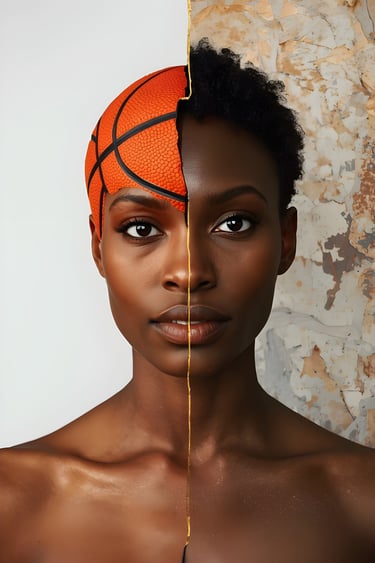
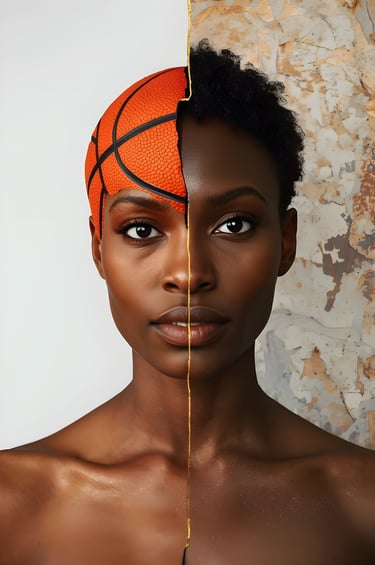
Concurrently, Cristin Tierney Gallery in New York added Debbi Kenote, a Brooklyn-based abstract painter whose work blends woodworking and quilting traditions rooted in nostalgia and childhood memory . Kenote, who received her MFA from Brooklyn College, will have her first solo exhibition with the gallery in April . Her work has been exhibited internationally, with placements in the OZ Art Collection and Capital One Corporate Collection .
These two moves are not isolated events. They reflect a broader structural shift documented across the art market. Bergos Art Consult noted in February that “textiles, ceramics, and fiber-based practices, long peripheral to the blue-chip canon, have moved decisively into institutional and market focus” . Major exhibitions have marked this trajectory: Tate Modern’s Anni Albers survey (2018–19), the Barbican’s Unravel (2024), and Woven Histories, which concluded at MoMA in 2025, positioned weaving not as heritage but as categorical insistence .
Curators now identify this as a defining trend of 2026. Rodrigo Moura, artistic director of MALBA in Buenos Aires, told Artsy that “we will continue to see a growing mainstream interest in practices that have traditionally been categorized as craft or applied arts, such as ceramics and fiber art” . Moura noted that long-overlooked artists like Olga de Amaral and Lee ShinJa are now being championed, creating new historical reference points for a younger generation for whom boundaries between fine art and craft are “increasingly blurred—and, in many cases, no longer relevant” .
The 2026 Venice Biennale, curated posthumously by Koyo Kouoh, will foreground fiber and textile practices as structural rather than decorative, with national pavilions from Saudi Arabia, Turkey, Pakistan, and France all placing textile-based work at the conceptual core .
What explains this recalibration? ArtsHub’s 2026 forecast suggests that after last year’s fixation on AI, “there is a renewed emphasis on materiality—hand-built ceramics, complex textiles, sustainable jewellery—precisely because they resist automation” . In a world saturated with generative content, “human ‘verification’ has become valuable again: walking into a studio, seeing charcoal under fingernails, sensing the physical relationship between maker and object” .
Collector and author Sylvain Levy frames this as a market rediscovering selectivity: “What endures are works with formal strength, traceable histories, and institutional anchoring. What weakens is the vast middle ground once sustained by momentum rather than conviction” .
For institutions and collectors, the implication is clear. Artists whose practices carry both conceptual weight and material specificity—who work with their hands, engage cultural memory, and resist algorithmic flattening—are gaining quiet but sustained attention. The pattern visible in the Mohamoud and Kenote announcements is not a momentary trend but a structural rebalancing toward work that can hold meaning under scrutiny.
Sources:
ARTnews, “Roberts Projects Takes On Esmaa Mohamoud, Cristin Tierney Adds Debbi Kenote, and More,” March 4, 2026
Bergos Art Consult, “From Surface to Structure: The Return of Material Thinking,” February 2026
Roberts Projects, artist roster and exhibition history
Cristin Tierney Gallery, representation announcement
Artsy, “16 Leading Curators Predict the Art Trends of 2026,” January 2026
ArtsHub, “2026 Is the Year the Art World Finally Gets Real—and Other Predictions,” February 2026
Sylvain Levy, “The Art Market in 2026: When Selectivity Replaces Velocity,” January 2026
Baker Hall, Debbi Kenote artist profile
Artbridge Nexus is a private, invitation‑only intelligence framework serving artists, collectors, and institutions. We do not take commissions. Learn more at artbridgenexus.com